
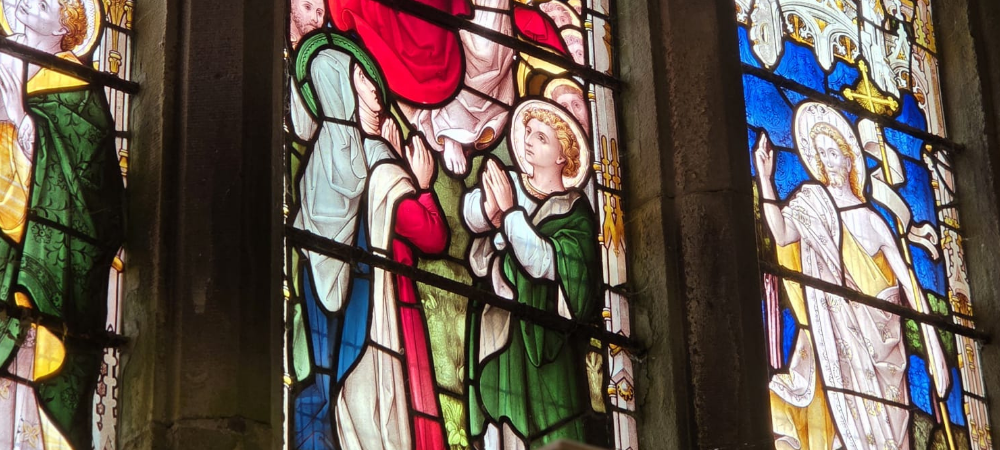
“Fear not, for I have redeemed you; I have called you by name, you are mine.”
Book of Isaiah 43:1
Jesus tells us that God knows us completely. He knows every joy and every sorrow, every success and every failure, everything we have done and everything that has been done to us. Christians believe that every person is deeply loved by God. There is nothing that can separate us from that love. Yet we also know that human beings are not perfect.
From time to time, we hurt others, fail to do what is right, or fall short of the love to which God calls us. Christians often speak about this as sin, but by this we do not simply mean breaking rules or getting things wrong. At its heart, sin is anything that damages our relationship with God, harms our neighbour, or prevents us from loving as fully as we should. It is in these moments that we are called not to despair, but to turn back towards God.
Christians believe that God is always ready to listen when we pray, and always ready to forgive those who seek His mercy. Many people find great comfort in speaking honestly to God in private prayer, asking for forgiveness and strength to begin again. At other times, however, we may feel the need for a more formal act of reconciliation. We may need pastoral guidance, spiritual support, or simply the reassurance of hearing God’s forgiveness spoken aloud.
For this reason, the Church offers the ministry of Confession, sometimes known as Reconciliation. In a confidential and prayerful setting, you may speak openly with the priest about anything weighing on your heart. The priest will listen without judgement, offer pastoral support where appropriate, and pronounce God’s forgiveness through words of absolution. Unlike some Christian traditions, private confession is not a requirement within the Church in Wales. Many Christians never make use of it, while others find it a valued part of their spiritual life. A traditional Anglican saying expresses this well: “All may, some should, none must.”
What matters is not following a rule, but seeking an honest and living relationship with God. Confession begins with self-reflection. It involves looking carefully at our lives, recognising where we have fallen short, and bringing those things before God with honesty and humility. Most importantly, confession is not about dwelling on past mistakes. It is about growth, healing and new beginnings.
The word repentance is often misunderstood. It does not simply mean feeling sorry for something. It means changing direction. Through confession and repentance, Christians seek God’s help to leave old mistakes behind and live differently in the future. Many people find confession particularly helpful during Advent and Lent, seasons of reflection and preparation before Christmas and Easter. These are traditional times for Christians to renew their prayer life, examine their conscience and grow closer to God. However, Confession can be requested at any time of year.
Any baptised Christian who feels called to make their confession is welcome to speak with the priest. Those who are not baptised are always welcome to seek pastoral support, spiritual guidance or simply a listening ear.
For more information, or to arrange confession, you are warmly invited to get in touch.
Top Tips!
Take time to reflect beforehand
Before making your confession, it can be helpful to spend some time in prayerful self-reflection, sometimes called an examination of conscience. Rather than worrying about every mistake you may have made, try to reflect honestly on the things that may be affecting your relationship with God, with other people, or with yourself.
Begin with prayer
Ask the Holy Spirit to guide your thoughts and help you see yourself honestly and compassionately. God desires a relationship with you and will gladly help you as you prepare for confession.
Do not worry if it is your first time
If you have never made your confession before, or it has been many years since you last did so, there is no need to worry. The priest will gently guide you through the process. There is no need to remember special words or worry about getting everything right.
Your confession is completely confidential
Everything shared during confession is held in the strictest confidence. This is known as the Seal of Confession. What is said in confession remains between you, the priest and God.
You will not be judged
The priest is not there to condemn you, but to listen, support and proclaim God’s forgiveness. Whatever you bring to confession, you will be received with compassion, discretion and understanding. The focus of confession is never shame, but God’s mercy and your growth in faith.
Remember: “All may, some should, none must.”
Private confession is available to all Christians, can be a great source of comfort and spiritual growth, but is never a requirement. Many Christians make regular use of confession, while others seek God’s forgiveness through prayer and worship.

